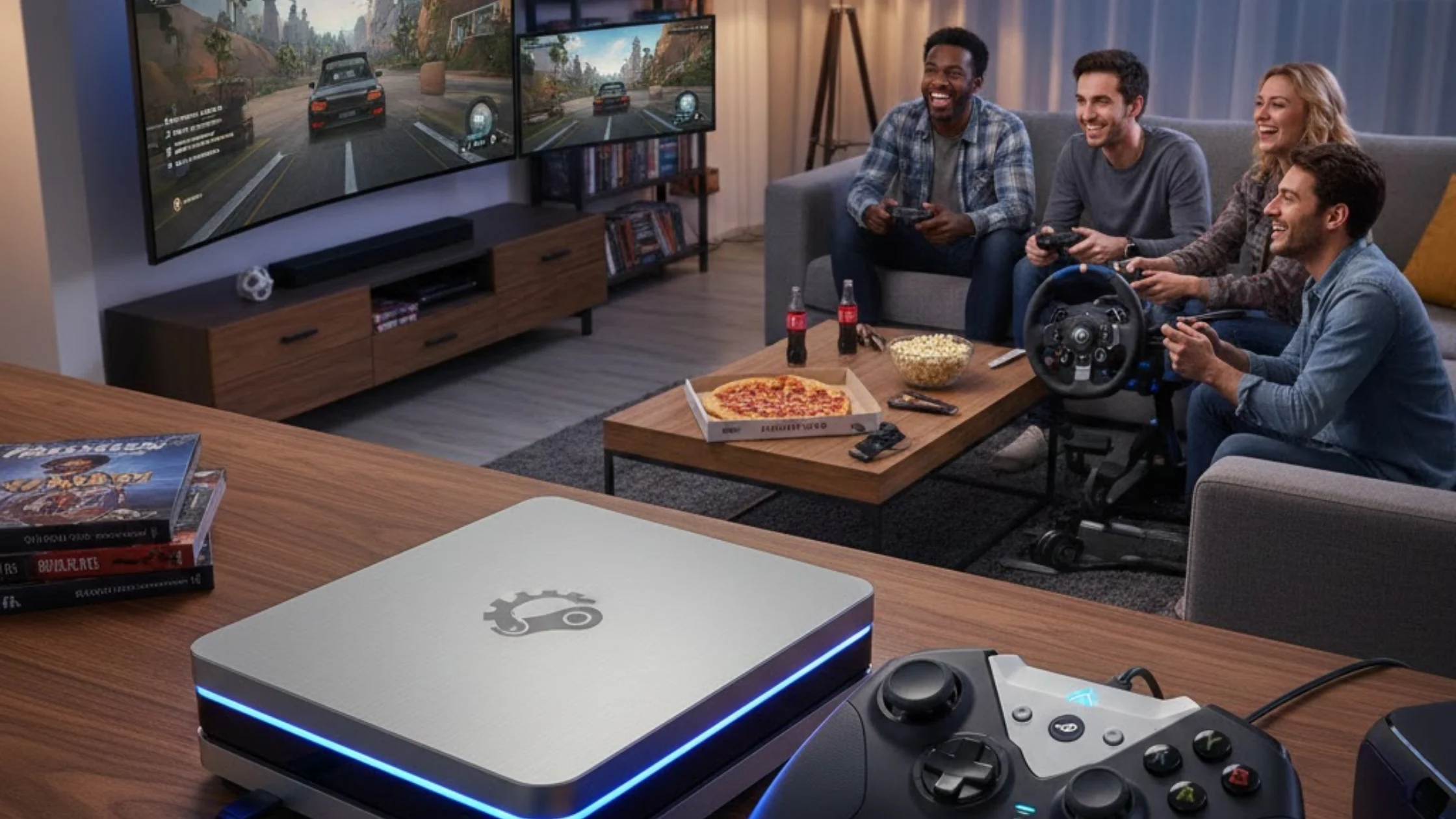
Picture your living room. A sleek black box under the TV. Not a PlayStation. Not an Xbox. It’s a Valve Steam Machine. You boot it up. Your entire Steam library is there, ready to play on the big screen. This was the dream in 2015. It was Valve’s big swing.
A bold attempt to break the console cycle with open, PC-powered hardware. The Valve Steam Machine was supposed to be the future. It wasn’t. It was a fascinating, beautiful flop. But its ghost still haunts the gaming world. Today, we’re unpacking this curious piece of Valve Steam hardware.
We’ll look at its ambitious specs, its confusing reality, and the hard lessons it taught. This is the story of a SteamOS gaming PC that aimed for the moon and landed with a quiet thud in a few living rooms.
Table of Contents
The Grand Promise: Your PC Library, On the Couch
Valve had a problem. A great problem. Millions of people used Steam on Windows PCs. But the living room was owned by Sony, Microsoft, and Nintendo. Valve’s answer was a two-part vision. First, a new operating system: SteamOS. A Linux-based system built for games and the Big Picture Mode interface. Second, the hardware to run it: the Steam Machine.
The idea was simple and radical. Multiple PC manufacturers would build these boxes. They’d come in different shapes, specs, and prices. You’d buy one like a console. Plug it into your TV. It runs SteamOS. You’d access your Steam library. No Windows license.
No complicated setup. Pure, simple living-room PC gaming. This was Valve’s gaming ecosystem trying to leap from the desk to the den. It was an open challenge to the walled gardens of traditional consoles.
The Bumpy Reality: Confusion at Launch
The hype was real. Then the details emerged. And confusion set in. The Valve Steam Machine wasn’t one machine. There were many. Companies like Alienware, Zotac, and CyberPowerPC all made their own versions. The Steam Machine specs varied wildly. A cheap model might have weak integrated graphics. A high-end model could cost over $1,500. This was the first crack in the plan.
For the average console buyer, this was madness. Do I buy the PlayStation 4 or… which of these twelve different Steam Machines? The messaging was a mess. The Steam Machine price and features landscape was a jungle. Furthermore, SteamOS had a giant problem: game compatibility.
It only ran Linux-native games. Your huge Windows-only Steam library? Much of it was unplayable. A technology called “Steam Play” (later Proton) promised to help, but it was immature. The user experience was suddenly very complicated. The promise of simplicity was broken.
Under the Hood: Specs, Performance, and the Controller
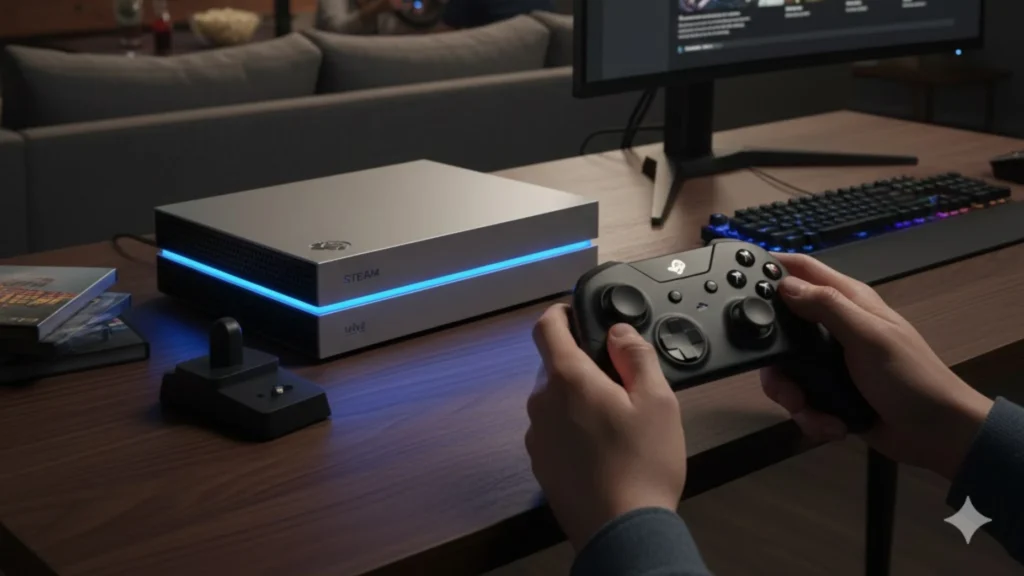
Let’s talk about the hardware itself. A Steam Machine was, at its heart, a small-form-factor gaming PC. Take a popular model like the Alienware Steam Machine (Alpha R1). Its specs were decent for 2015:
- CPU: Intel Core i3 (dual-core)
- GPU: Custom NVIDIA GeForce GPU (similar to a GTX 860M)
- RAM: 4GB or 8GB DDR3
- Storage: 500GB or 1TB hard drive.
The performance was okay. It could handle many games at 1080p and medium settings. But it wasn’t a powerhouse. The gaming benchmarks showed it trailing behind a similarly priced custom PC. The design and build was often slick and console-like. Quiet. Unobtrusive.
The real star was the Steam Machine controller. This thing was weird. It ditched the traditional right thumbstick for a giant, clickable haptic trackpad. The idea was genius: simulate mouse precision for PC games on a couch. The learning curve was a brick wall.
It felt strange. Some people loved it for certain games. Many hated it. It was a bold innovation that never found its mass audience. The controller features were ambitious, but the execution was divisive.
Why It Really Failed: The Three Fatal Flaws
The Valve Steam Machine didn’t die because it was a bad idea. It died because of three concrete, fatal problems.
1. The Game Library Problem (The Killer)
This was the death blow. SteamOS relied on Linux. In 2015, the Linux game library was a tiny fraction of Steam. Major AAA titles like Call of Duty, Grand Theft Auto V, and Destiny were absent. You were buying a box that couldn’t play most of the popular games. The Steam Machine supported games list was its biggest weakness. No amount of clever hardware could fix this.
2. The Identity Crisis
Was it a console? Was it a PC? It tried to be both and succeeded at neither. For console gamers, it was too expensive and complicated. For PC gamers, it was less powerful and flexible than the tower under their desk. The Steam Machine vs gaming PC debate was easily won by the traditional PC. The Steam Machine vs consoles debate was won by the PlayStation 4’s simplicity and exclusive games.
3. Valve’s Half-Heart
Valve is a software company. They famously don’t like making hardware. They partnered with other companies to build the boxes. This diffused responsibility. There was no single, iconic “Steam Machine” to rally behind. Marketing was weak. Support felt scattered. It lacked the fierce, focused drive of a true platform holder.
The Phoenix: From Steam Machine Ashes Rises the Steam Deck
Now, fast forward to 2022. Valve announces the Steam Deck. A handheld PC that runs your entire Steam library. It’s a smash hit. Why did this work where the Steam Machine failed? The lessons were learned.
The Steam Deck is one device. Clear specs. One price tier. Simple. Most importantly, it runs a new version of SteamOS with “Proton” baked in. Proton is a compatibility layer that lets Windows games run on Linux seamlessly. It’s the magic the Steam Machine desperately needed.
The Steam Machine vs Steam Deck comparison is brutal. The Deck solved the library problem. It embraced its PC-ness but delivered a clean, console-like experience. It is the spiritual successor. The Valve Steam Machine was the painful, necessary prototype.

Legacy and Lessons: What the Steam Machine Left Behind
Don’t call the Valve Steam Machine a total waste. Its legacy is real.
- Advanced Linux Gaming: The push for SteamOS and Steam Machines forced Valve to invest heavily in Linux gaming tools. This work directly led to Proton, which now benefits millions of Linux desktop gamers and powers the Steam Deck.
- It Proved the Living Room Concept: The idea of a PC-powered living room box was valid. We see it today in devices like the Xbox Series X (which is essentially a custom PC) and the continued popularity of hooking gaming laptops to TVs.
- The Controller’s DNA: The experimental Steam Machine controller paved the way for the Steam Deck’s trackpads and gyro controls. Valve learned what works and what doesn’t.
If you find a Steam Machine today, it’s a cool collector’s item. You can install Windows on it and turn it into a decent living room PC. You can try to revive SteamOS. But as a gaming console, its time has passed. It remains a fascinating “what if” in gaming history. A testament to ambition, complexity, and the harsh reality of the market.
FAQs: Your Steam Machine Questions, Answered
Q1: Can you still buy a new Valve Steam Machine?
No. The Steam Machine initiative was effectively discontinued by 2018. Valve and its partners stopped manufacturing them. You can only find them on the second-hand market, like eBay. They are obsolete as gaming devices but can be fun tech curiosities.
Q2: What is the main difference between a Steam Machine and a Steam Deck?
The Steam Machine was a set-top box for your TV that failed due to high cost, game incompatibility, and market confusion. The Steam Deck is a handheld, all-in-one portable PC that succeeded by being affordable, having a unified design, and using advanced compatibility software (Proton) to run almost any Steam game.
Q3: Could you upgrade a Steam Machine’s hardware?
Most Steam Machines were not designed for easy upgrades. Like many small-form-factor PCs, some components like the RAM and storage drive could sometimes be swapped. However, the GPU and CPU were often soldered or used proprietary form factors, making meaningful upgrades very difficult or impossible.
Q4: Did the Steam Machine run any exclusive games?
No. There were never any games made exclusively for the Steam Machine or SteamOS. It relied entirely on the existing library of Linux-compatible games on Steam. This was one of its major strategic weaknesses compared to traditional consoles with compelling exclusives.
Q5: Is SteamOS still available to download?
Yes. While the Steam Machine hardware is dead, SteamOS is very much alive. Valve continues to develop it as the operating system for the Steam Deck. You can download an official version (based on Arch Linux) to install on other PCs, though it’s primarily optimized for the Deck’s hardware.
The Valve Steam Machine story isn’t about a stupid mistake. It’s about a smart, forward-looking gamble. It was an attempt to reshape a market that didn’t want to be reshaped. It overestimated the appeal of openness and underestimated the power of simplicity and software libraries.
Yet, every bit of code written for SteamOS, every lesson learned about controller design, and every painful conversation about game compatibility fed directly into the device that finally got it right: the Steam Deck.
The Steam Machine was a bridge. We crossed it, it creaked and swayed, but it got us to the other side. In the world of tech, failures like this are just as important as the successes.
They are the raw, unfiltered experiments that light the path forward. So, if you see one in a thrift store, give it a nod. It dreamed big. And its dream, in a roundabout way, finally came true.
Read More: What is Decentralized AI