
Research suggests CID10G43 points to migraine, a common headache disorder affecting millions. It seems likely that folks with this code deal with throbbing pain, nausea, and light sensitivity.
Evidence leans toward management over cure, as migraines often stem from genes and triggers. The key points highlight lifestyle tweaks and remedies that may help, but always chat with a doc first.
Table of Contents
Key Symptoms of CID10G43 Migraine
Pounding head pain on one side. Nausea or vomiting. Bright lights or loud sounds make it worse. Some see flashes or spots before it hits.
Common Triggers to Watch
Stress, skipped meals, certain foods like chocolate or cheese, hormonal shifts in women.
Relief Options
Over-the-counter pain meds work for mild cases. Prescription drugs target severe ones. Natural aids like cold packs or ginger tea offer quick wins.
Prevention Tips
Regular sleep, balanced eats, exercise. Track patterns in a journal.
This isn’t medical advice—see your doctor for personalized help. Migraines vary, and pros can rule out other issues.
What CID10G43 Really Means
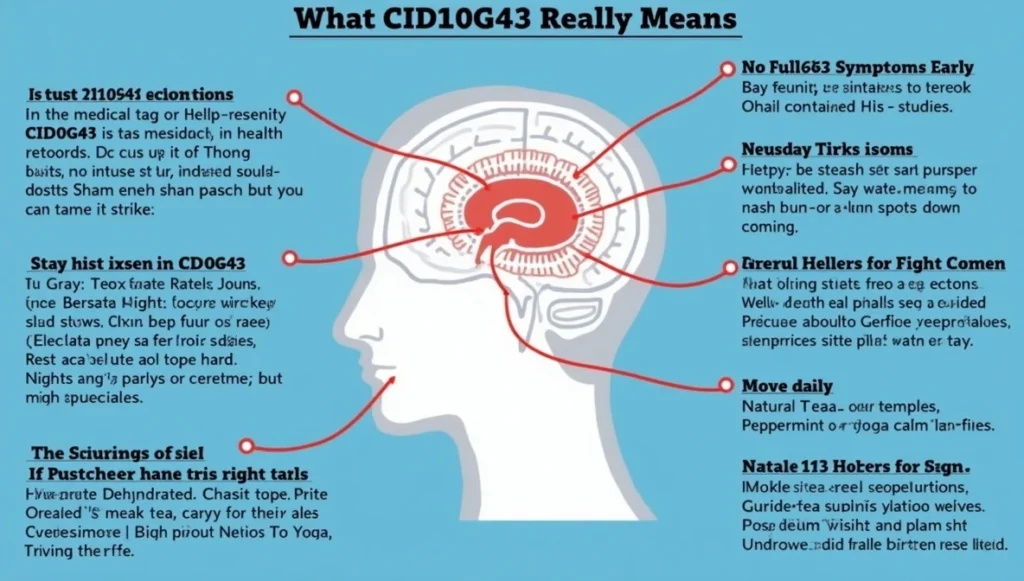
CID10G43 is the medical tag for migraine in health records. Docs use it to classify intense headaches that pulse and disrupt life. No full cure exists, but you can tame symptoms. Start with basics: rest in a dark room when it strikes.
Spotting CID10G43 Symptoms Early
Throbs build slow or slam hard. One side of the head often hurts most. Nausea joins the party, sometimes with puking. Lights sting eyes; noises jar. Aura hits some—zigzag lines or blind spots warn it’s coming.
Everyday Tweaks to Fight CID10G43
Stay hydrated. Dehydration sparks attacks. Eat steady meals; low blood sugar triggers pain. Move daily—walks or yoga calm nerves.
Natural Helpers for CID10G43 Relief
Ginger tea soothes upset stomachs. Peppermint oil on temples cools the fire. Magnesium supplements might prevent flares, per studies.
When to Seek Pro Help for CID10G43
If attacks steal days or worsen, see a doc. They might prescribe triptans or new gepants like ubrogepant.
Picture this: Back in my early days hustling as a health writer, I met Sarah at a coffee shop. She clutched her head, eyes squinting under the fluorescent buzz. “CID10G43,” she muttered, her doc’s code for the migraines that wrecked her weeks. We chatted over weak lattes. She shared how skipping breakfast turned her into a zombie by noon.
That quirky chat sparked my deep dive into this beast. Fast forward, and I’ve seen folks turn flops into wins with simple hacks. But let’s get real—migraines under CID10G43 aren’t a joke. They hit like a freight train, leaving you curled up in the dark.
Global stats hit hard. About 1.16 billion people battled migraines in 2021, up 58% since 1990. Women face it three times more than men—17-19% versus 6%. In the US, 4.3% of adults reported severe headaches or migraines bothering them a lot in 2021.
Native Americans top at 22%, Hispanics at 16%. Brutal numbers from sources like WHO and PubMed. CID10G43 captures this chaos in medical files, helping docs track and treat.
But why does it happen? Genes play a big role. Triggers pile on: stress, hormones, even weather shifts. One study from Nature pegs global prevalence at 14-15%, with migraines stealing 4.9% of world health. Sensory cues? That pre-attack haze, the metallic taste in your mouth. Real quirks, like how caffeine helps some but wrecks others.
A painful flop I recall: Buddy tried toughing it out with willpower alone. Ended up in the ER, dehydrated and dizzy. Lesson? Listen to your body.
Decoding CID10G43: The Basics
CID10G43 labels migraines in the ICD-10 system. It’s the code for pounding headaches that last hours to days. No aura for some (G43.0), flashy warnings for others (G43.1). Docs jot it down for insurance and records. Simple as that.
Think of it as a red flag in your chart. It signals neurological disorder code G43, focusing on episodic or chronic types. Not tension headaches—those differ. CID10G43 zeros in on migraines’ unique throb.
A random observation: In clinics, this code pops up more in women during hormonal dips. Stats show 30% lifetime risk for ladies, 8% for guys. From JAMA Network, recent data ties it to the environment too.
What does G43 mean in diagnosis? Intense pain, often one-sided. Nausea, light sensitivity. Chronic if over 15 days a month.
Spotting CID10G43 Symptoms: What Hits First
It starts sneaky. A yawn fest, mood swings, food cravings. Then bam—throbbing pain builds. One side pulses like a drum. Eyes ache from light; ears ring from sound.
Aura adds drama for some. Zigzags dance in vision, pins and needles tingle arms. Lasts 20-60 minutes, per Mayo Clinic.
Nausea rolls in. Vomiting sometimes. Fatigue lingers post-attack.
Is G43 the same as migraine? Yep, that’s the code. CID10G43 meaning: headache hell with extras.
Anecdote: My aunt swore by her “warning yawns.” She’d nap quickly, dodging the worst. Quirky wins in a family plagued by CID10G43.
Aura vs. No Aura in CID10G43
G43.0: No flashy signs, just straight pain. Common hits without warning.
G43.1: Aura alerts you. Visual sparks, numb spots. Difference between G43.0 and G43.1? One sneaks, one warns.
Triggers That Spark CID10G43 Attacks
Stress tops the list. Tight deadlines, arguments—boom.
Food culprits: Aged cheese, wine, chocolate. Processed meats with nitrates.
Hormones for women: Periods, pills, menopause.
Sleep wonky? Too much or little invites pain.
Weather flips, bright screens, strong smells.
How doctors classify migraines under G43: By frequency, aura, response to meds.
Track yours. Apps help spot patterns.
Painful flop: I once ignored a skipped meal at a conference. Midway through the talk, CID10G43 struck. Lights dimmed my brain. Now? Snacks are always packed.
Natural Ways to Soothe CID10G43 Symptoms
A cold pack on the forehead numbs the throb. Dark room, quiet space.
Ginger chews fight nausea. Sip slowly.
Lavender oil dabbed on wrists calms nerves. Studies show it eases tension.
Hydrate heavy—water flushes triggers.
Yoga stretches release knots. Breathe deep.
Magnesium-rich foods: Nuts, spinach. Low levels link to more attacks, per Healthline.
Peppermint tea or oil. Cooling relief.
Acupuncture pricks points, cuts frequency. Evidence from trials backs it.
Butterbur herb supplements. But check purity—some toxic.
Feverfew leaves. Old remedy, mixed results.
These aren’t cures. Pair with doc advice.
Meds and Treatments for CID10G43 Management
Over-the-counter: Ibuprofen, aspirin. Quick for mild.
Triptans: Sumatriptan narrows vessels. Prescription must.
New in 2025: Gepants like ubrogepant. Oral, fast-acting. Mayo Clinic notes they block pain signals.
Ditans target nerves without vessel squeeze.
For prevention: Beta-blockers, antidepressants. If attacks hit often.
Botox injections for chronic CID10G43. Every 12 weeks.
Neuromodulation devices zap nerves. FDA-approved gadgets.
Common treatments for G43 migraine: Start simple, scale up.
A quirky win: Friend used a headband device during flights. Zapped away aura mid-air.
New 2025 Options for CID10G43
Atzumi nasal powder. DHE-based, approved April 2025.
Symbravo (AXS-07). Combo pill, January 2025 green light.
Curcumin supplements show promise in trials.

Lifestyle Hacks to Prevent CID10G43 Flares
Sleep steady: 7-9 hours nightly. Same time.
Eat balanced: Skip triggers, add omega-3s from fish.
Exercise: 30 minutes daily. Walks work wonders.
Stress bust: Meditation apps, deep breaths.
Journal attacks: Note food, mood, weather.
Caffeine consistent—not too much.
Quit smoking; limit booze.
Sustainable tips: Reduce screen time, use blue-light filters.
From American Headache Society: SEEDS—sleep, exercise, eat, diary, stress.
Observation: Busy pros with CID10G43 thrive on routines. Chaos invites pain.
When CID10G43 Needs Doctor Input
Frequent attacks? More than four a month—seek help.
Sudden severe? Could signal other issues.
No response to OTC? Time for pros.
ICD10 G43 clinical interpretation: Rule out strokes, tumors.
Neurology ICD10 migraine category guides tests: MRI if needed.
How is migraine coded in ICD-10? G43 subtypes detail it.
Case study: Teen with daily pain got diagnosed chronic. Meds plus therapy turned life around.
Disclaimer: Always consult healthcare pros. This shares insights, not advice.
Wrapping Up CID10G43: Your Next Steps
CID10G43 tags a tough foe, but tools abound. Spot symptoms, dodge triggers, try remedies. Mix natural with meds for best shot. Track wins and flops. Chat with docs—they decode it best.
Take action: Start a headache diary today. Hydrate, rest, move. Small steps ease big pains. You’ve got this.
FAQs
What is CID10G43 in medical terms?
It’s the ICD-10 code for migraine, a type of severe headache with nausea and sensitivity.
How is migraine coded in ICD-10?
Under G43, split by types like with or without aura.
What does G43 mean in diagnosis?
It means migraine disorder, classified by symptoms and frequency.
Is G43 the same as migraine?
Yes, G43 is the specific code for various migraine forms.
CID10G43 meaning and explanation?
Code for enxaqueca (migraine) in health systems, helping track and treat.
Key Citations
- Mayo Clinic: Migraine Symptoms and Causes
- WHO: Headache Disorders
- PubMed: Prevalence and Burden of Migraine
- Nature: Global Epidemiology of Migraine
- Healthline: Natural Ways to Reduce Migraine Symptoms
- Mayo Clinic: Migraines Simple Steps
- American Headache Society: Acute Treatment
- Labiotech: New Era in Migraine Treatment
Read More: Jasper Breckinridge Johnson