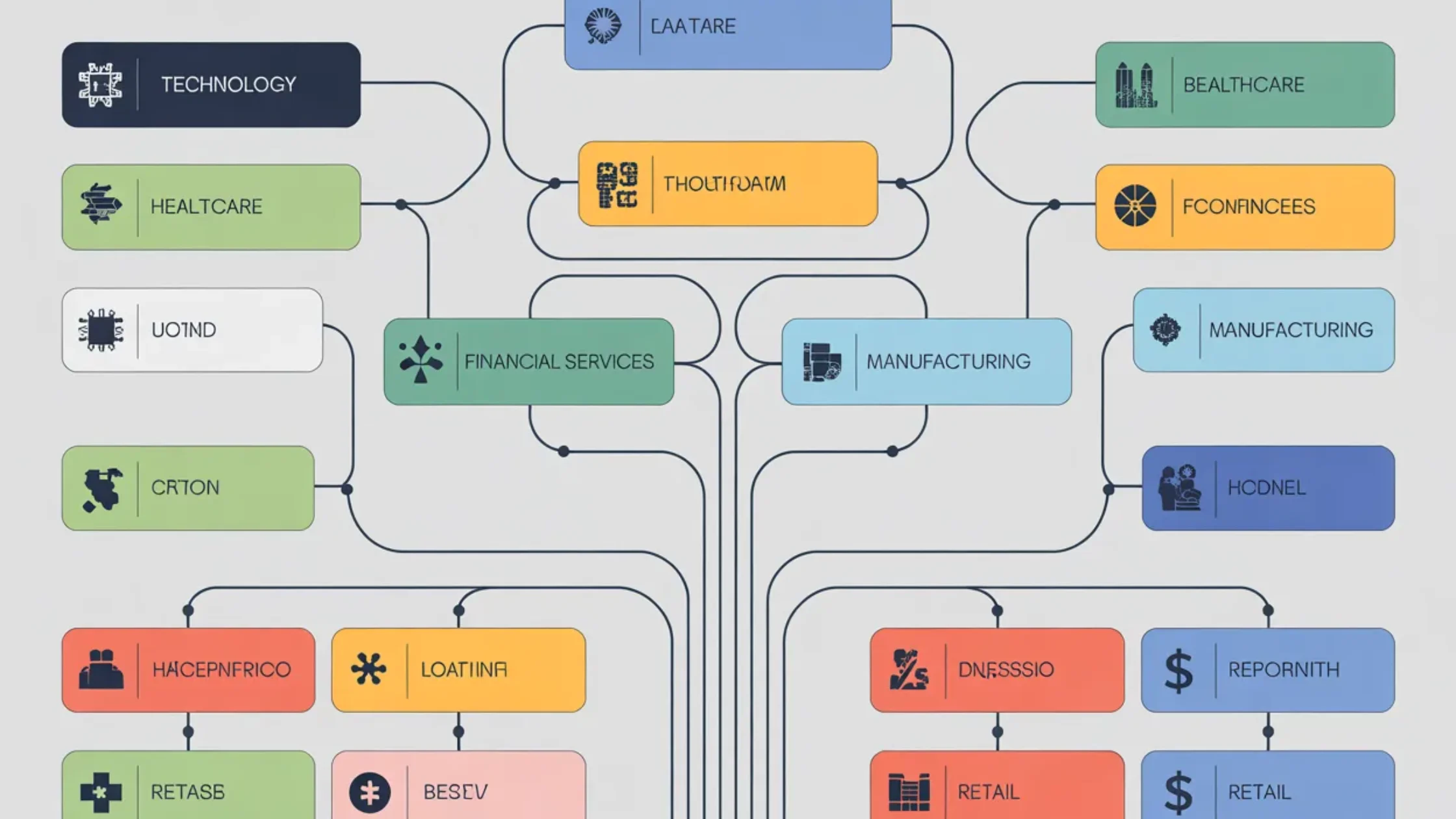
Imagine you are at a huge food court. You have a pizza place, a burger joint, and a salad bar. Even though they all sell food, they serve very different cravings. In the world of commerce, we call these “verticals.” A business vertical is just a fancy way of saying a specific niche or industry.
When we talk about business vertical classification categories, we are looking at how companies focus on a narrow group of customers. Instead of trying to sell everything to everyone (like a big supermarket), a vertical business makes one thing perfectly for one specific group.
This focus helps businesses become experts, which makes customers trust them more. In today’s fast-moving world, being a specialist is often the secret to lasting success.
Why Modern Verticals Matter for Your Growth
Back in the day, a company might just say, “I’m in the tech industry.” But today, that is way too broad! Using specific business vertical classification categories allows a company to solve exact problems. If you are a doctor, you don’t just want “software.” You want “healthcare software” that understands medical laws and patient privacy.
By picking a vertical, a business can spend its money more wisely. They don’t have to guess what their customers want because they live and breathe that specific world. This creates a “win-win” situation. The business grows faster because it’s efficient, and the customer gets a product that feels like it was made just for them. It’s all about depth over breadth.
The Big Three: How Verticals are Structured
Not all verticals are built the same way. Experts usually group them into three main styles. First, there are Corporate Vertical Markets. This is where one big company owns every step of the process. Think of an oil company that owns the land, the trucks, and the gas stations. They have total control over everything.
Second, we have Administered Vertical Markets. Here, one powerful company doesn’t own the others, but it is so big that everyone else follows its lead. Finally, there are Contractual Vertical Markets. This is very common for small businesses and franchises.
Independent shops sign a contract to work together to save money and reach more people. Understanding these business vertical classification categories helps you see how power moves in an industry.
Exploring the Healthcare and Life Sciences Vertical
The healthcare world is one of the most important business vertical classification categories we have. It isn’t just about hospitals anymore. In 2026, this vertical includes telemedicine, wearable health tech, and even AI-driven drug research. Every part of this niche has to follow very strict rules to keep people safe.
Because the rules are so tough, a general software company would struggle here. That is why specialized “Health-Tech” firms are booming. They understand the “language” of doctors and the “needs” of patients. When a business stays inside this vertical, they build “Expertise” (part of Google’s E-E-A-T) that a general company just can’t match.
The Fast-Paced World of Fintech and Finance
Have you noticed how you rarely carry cash anymore? That’s thanks to the “Fintech” vertical. This is one of the business vertical classification categories that changes the fastest. It covers everything from mobile banking apps to high-tech investment tools. It is a world where security and trust are the most important things.
In this vertical, businesses focus on making money move faster and safer. They don’t just provide a service; they provide “Trust.” Whether it is a small app for tracking your chores or a giant system for global banks, the focus remains on financial flow. This niche is great for innovation because everyone uses money, but everyone wants it handled differently.
Manufacturing and the New “Industrial” Vertical
When you think of manufacturing, you might think of old factories with smoke. But today, the business vertical classification categories for industry look like science fiction movies! We now have “Advanced Manufacturing.” This includes 3D printing, robotics, and smart sensors that talk to each other.
Companies in this vertical are focused on making things better, faster, and cheaper. They serve other businesses (B2B) rather than regular people. By focusing on a specific part of the supply chain—like making specialized bolts for airplanes—a company can dominate its market. They don’t need millions of customers; they just need the right ones.
The Retail and E-commerce Evolution
Retail has changed more in the last ten years than in the previous fifty. Within the business vertical classification categories, retail is now split into “brick-and-mortar” and “digital-first.” But even deeper than that, we see “Micro-Verticals.” This could be a shop that only sells eco-friendly yoga gear for seniors.
This level of detail is what makes modern retail work. By using data, these businesses know exactly who is buying. They don’t waste time showing ads for dog food to cat owners. This “people-first” approach is exactly what helpful content guidelines look for. It’s about providing real value to a specific community of shoppers.
Education and the “EdTech” Revolution
Learning isn’t just for classrooms anymore. The education vertical has exploded into a massive category called EdTech. These business vertical classification categories include online courses, virtual reality training, and apps that help you learn a new language while you eat breakfast.
The goal here is “knowledge transfer.” Whether it is a university or a small company teaching people how to code, they are all in the same vertical. They face the same challenges, like keeping students engaged and proving that the learning actually works. It is a rewarding niche because it helps people improve their lives.
Real-World Examples of Vertical Success
Let’s look at a real example. A company like HubSpot is “Horizontal” because it sells to everyone. But a company like Procore, which only makes software for construction, is “Vertical.” Procore wins in its niche because its buttons and features are labeled with words that construction workers actually use.
When you use business vertical classification categories to guide your business, you speak your customer’s language. If you sell to farmers, use words like “yield” and “irrigation.” If you sell to lawyers, talk about “compliance” and “discovery.” This simple shift in tone and focus is what separates the winners from the “everyone else” in 2026.
How to Choose the Right Vertical for Your Business
Choosing a path is the hardest part. You want a vertical that is big enough to make money but small enough that you can be the “best” in it. Start by looking at your own “Experience.” What do you know better than anyone else? If you spent ten years as a mechanic, you have a huge head start in the automotive vertical.
Check the competition. If a category is already crowded with giants, look for a “Micro-Vertical.” Instead of “Pet Care,” try “Organic Treats for Older Dogs.” By narrowing your focus, you make it easier for people to find you. Remember, it is better to be a big fish in a small pond than a tiny fish in a vast ocean!
Summary of Major Business Verticals
| Vertical Category | Focus Area | Key Examples |
| Healthcare | Patient care and medical tech | Hospitals, MRI makers, Telehealth |
| Fintech | Money, banking, and payments | Stripe, Crypto wallets, Banks |
| EdTech | Learning and school systems | Duolingo, Coursera, LMS tools |
| AgTech | Farming and food production | Smart tractors, Hydroponics |
| MarTech | Marketing and ads | Ad platforms, Email tools |
FAQs About Business Verticals
1. What is the difference between an industry and a vertical?
An industry is broad (like “Transportation”), while a vertical is specific (like “Electric Bike Delivery Services”). Think of the industry as the forest and the vertical as a specific type of tree.
2. Why do people say “there are riches in niches”?
This means that when you focus on a very specific group, you can charge more because you are an expert. You have less competition, so it’s easier to become the top choice for those customers.
3. Can a company operate in more than one vertical?
Yes! Big companies like Amazon operate in many. They are in Retail, Cloud Computing (AWS), and even Entertainment (Prime Video). However, most small businesses should start with just one.
4. How do business vertical classification categories help with SEO?
By using specific keywords related to a niche, you tell Google exactly what you are an expert in. This helps you rank higher for the people who are actually looking for your specific help.
5. Is “SaaS” a vertical?
Actually, SaaS (Software as a Service) is a “how” you deliver a product. You can have “Vertical SaaS” (software for one industry) or “Horizontal SaaS” (software for everyone).
6. How often do these categories change?
They evolve constantly! New tech like AI creates new verticals every year. It’s important to keep learning so you don’t get left behind in an old category.
Conclusion: Finding Your Focus
Understanding business vertical classification categories is like having a superpower for your career or business. It allows you to stop shouting into the wind and start talking directly to the people who need you most. Whether you are in healthcare, tech, or retail, remember that your “Expertise” is your greatest asset.
Don’t be afraid to go deep. The world doesn’t need another “general” company; it needs specialists who can solve real problems with care and precision. So, take a look at your skills today—which vertical are you ready to conquer?